The disposal of end-of-life photovoltaic (PV) panels is one of the most significant challenges of the energy transition. The surge in installations over recent decades means that the volume of PV modules requiring recycling is set to grow substantially in the coming years, both in Italy and across Europe.
CAMEC develops advanced PV panel recycling plants designed to ensure high efficiency, environmental sustainability, and the recovery of high-quality raw materials, including the treatment of next-generation bifacial panels.
Disposal of Bifacial Photovoltaic Panels: What are the Specifics?
Bifacial PV panels (glass-to-glass) have a different structure compared to traditional glass-backsheet modules. The presence of two glass surfaces requires specific technologies to ensure correct and safe disposal.
CAMEC solutions integrate a patented technology that allows for the 100% removal of glass from both sides of the panel, enabling the complete treatment of bifacial modules without the use of combustion, chemical agents, or thermal processes.
The principle remains entirely electromechanical, but the process is carried out with dedicated machinery that makes treatment more efficient compared to lines designed for traditional PV panels.
What Materials are Recovered from PV Panel Recycling?
An average PV panel weighs approximately 20 kg and is primarily composed of glass, plastic, aluminum, silicon, and copper. Thanks to CAMEC plants, it is possible to recover up to 99% of the materials, transforming waste into reusable secondary raw materials.
In detail:
- Glass: ~73% of weight – 99% purity, destined for reuse in the glass industry.
- Plastic: ~12% – up to 88% purity, with a recovery rate of up to 98.5%.
- Aluminum: ~10% – 100% purity and conversion, destined for foundries.
- Silicon: ~3% – 98% purity, reusable in the semiconductor sector.
- Copper: ~2% – 98-99% purity, reusable in foundries.
This approach drastically reduces the environmental impact of solar panel disposal, adhering to the principles of the circular economy.


What is the Photovoltaic Panel Treatment Process?
The CAMEC PV panel recycling process is fully automatic, traceable, and compliant with European standards. The main steps include:
- Automatic recognition of the panel and J-box via an optical system.
- Removal of junction boxes (single or triple).
- Removal of the aluminum frame.
- Controlled flipping of the panel.
- Patented glass removal.
- Shredding of the laminate.
- Material separation.
- Sorted collection of glass, metals, plastic, and silicon.
- Dust filtration via industrial filters.
The entire process takes place without atmospheric emissions, without combustion, and without the use of chemicals, ensuring safety for operators and respect for the environment.
Which CAMEC Machines are Used in the New Recycling System?
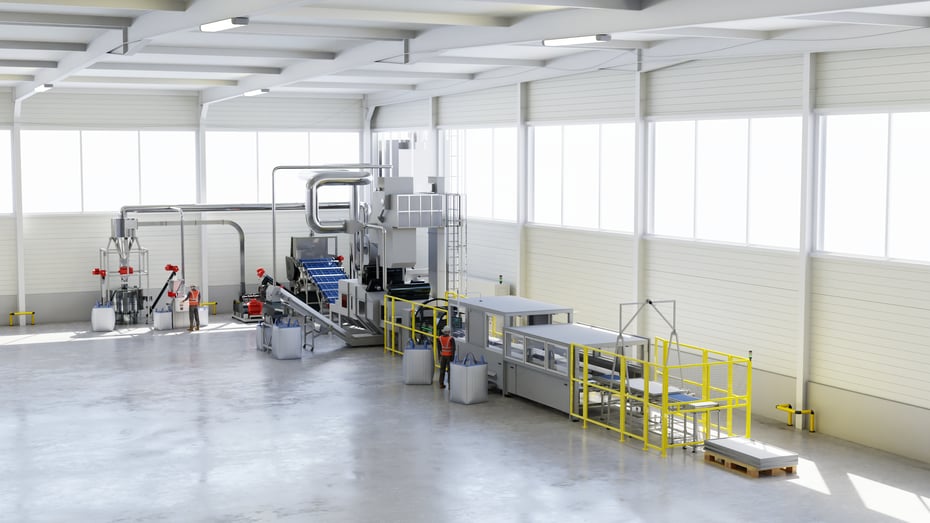
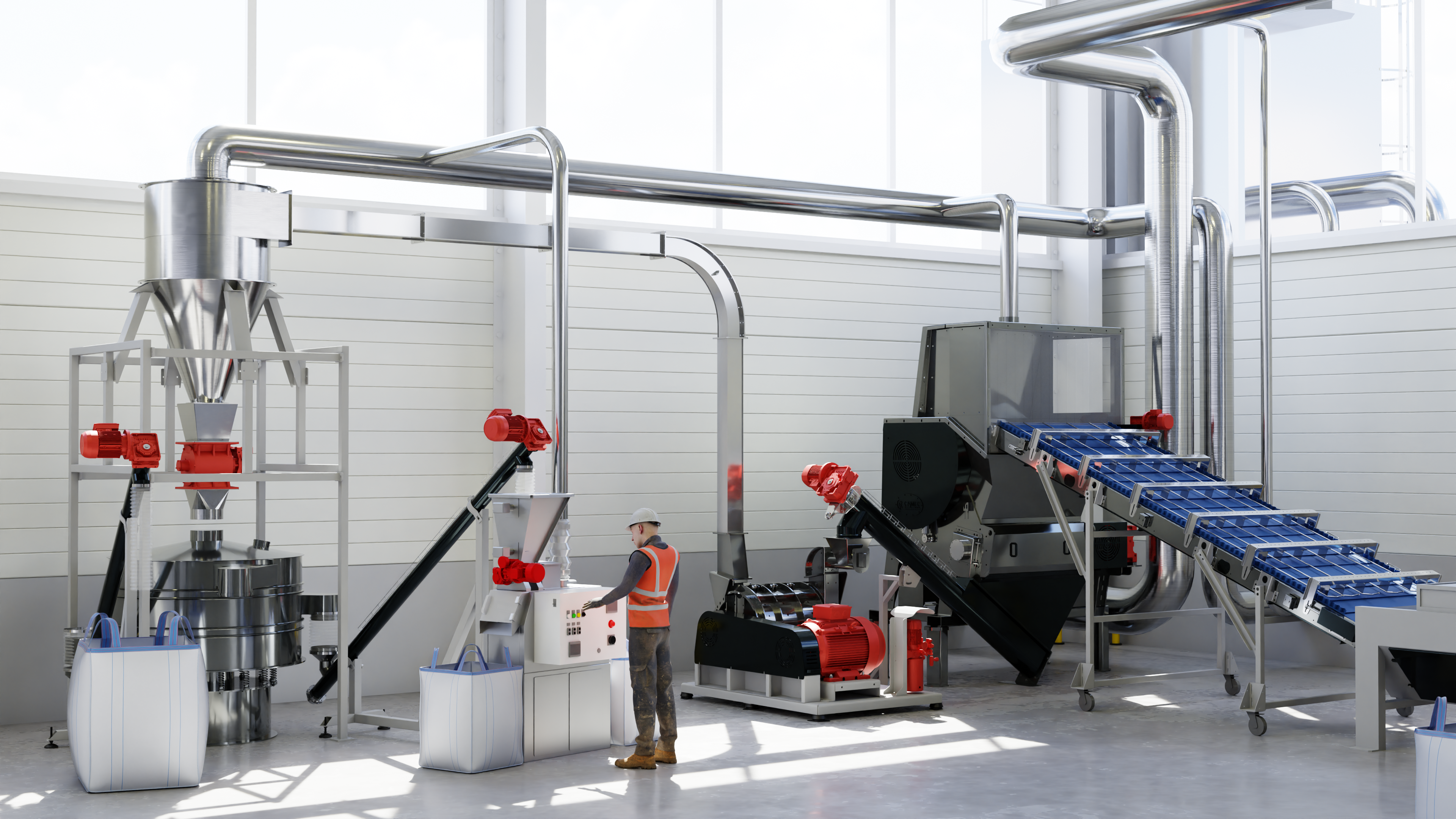
The CAMEC PV recycling system consists of a modular and scalable line, designed to treat up to 120 panels/hour (3 tons/hour) with only 2 operators per shift.
The line can include:
- Optical panel recognition system.
- J-box and frame removal units.
- Automatic panel flipper.
- Patented glass removal system.
- Industrial shredder.
- Gravitational separator.
- Material collection systems.
- Bag filter for dust management.
Optional accessories are also available, such as automatic loading robots, dedicated systems for bifacial modules, and mobile solutions for on-site pre-treatment.
Why is the CAMEC Plant an Evolution Over Traditional WEEE Solutions?
Compared to conventional systems for treating WEEE (Waste Electrical and Electronic Equipment), CAMEC plants for PV recycling represent a concrete technological evolution that allows to:
- Reduce energy consumption by up to 40%.
- Lower operating costs by up to 30%.
- Reduce the physical footprint (-20%).
- Completely avoid harmful emissions.
- Eliminate the need to dispose of residues.
- Recover materials with high purity.
- Recover the investment in an estimated period of 1 to 2 years.
Additionally, the line can be used as a stand-alone plant for Group 4 WEEE treatment, expanding operational opportunities.
PV Panel Disposal: A Strategic Choice for the Future
Recycling end-of-life photovoltaic panels is not just a regulatory obligation, but a real industrial opportunity. With CAMEC solutions, disposal becomes an efficient, sustainable, and value-oriented process, capable of supporting the growth of solar energy globally.
CAMEC transforms photovoltaic waste into resources for the future.
Do you want to turn PV panel disposal into a business opportunity? Discover CAMEC solutions for recycling end-of-life PV modules (including bifacial). Contact our team for a personalized technical consultation.