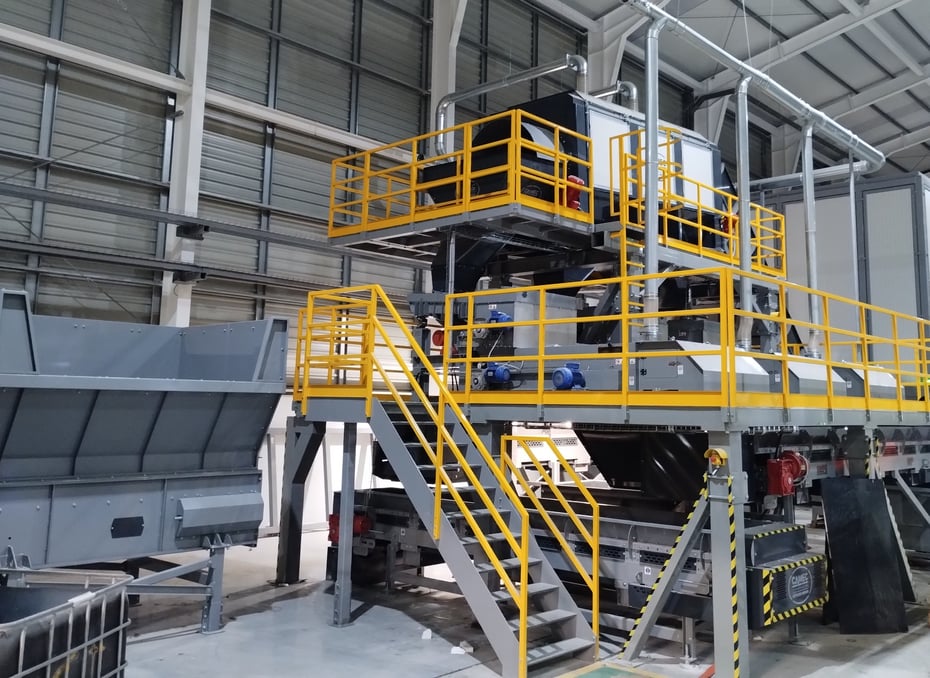
The performance of a WEEE (Waste Electrical and Electronic Equipment) treatment plant depends on the balance between process logistics, separation quality, and operational continuity. This principle guided CAMEC in the creation of its new WEEE treatment plant in Spain, developed to meet the needs of the Spanish and European markets with a modular solution focused on material recovery and valorization.
From a technical standpoint, the system is designed as a mechanical treatment line for WEEE. The organization of flows and process stability play a central role throughout all operational phases.
Process Logistics and Flow Management
The process logistics have been engineered to ensure an orderly, continuous, and controlled flow of material. WEEE is managed through a dedicated loading area and a manual pre-selection phase, which allows for the removal of critical components and enhances operational safety.
The linear layout reduces internal movement and simplifies daily plant management, contributing to the process stability and operational continuity required in an industrial WEEE treatment facility.
Valorization of WEEE Materials
The WEEE treatment plant enables the recovery and valorization of various types of materials, including:
- Ferrous metals
- Non-ferrous metals (such as aluminum and copper)
- Selected plastics
- Residual fractions directed to dedicated treatments.
The goal is not only to reduce the volume of electronic waste but to maximize the economic value of recovered materials, ensuring quality compatible with their re-insertion into industrial recycling cycles.
Performance and Process Reliability
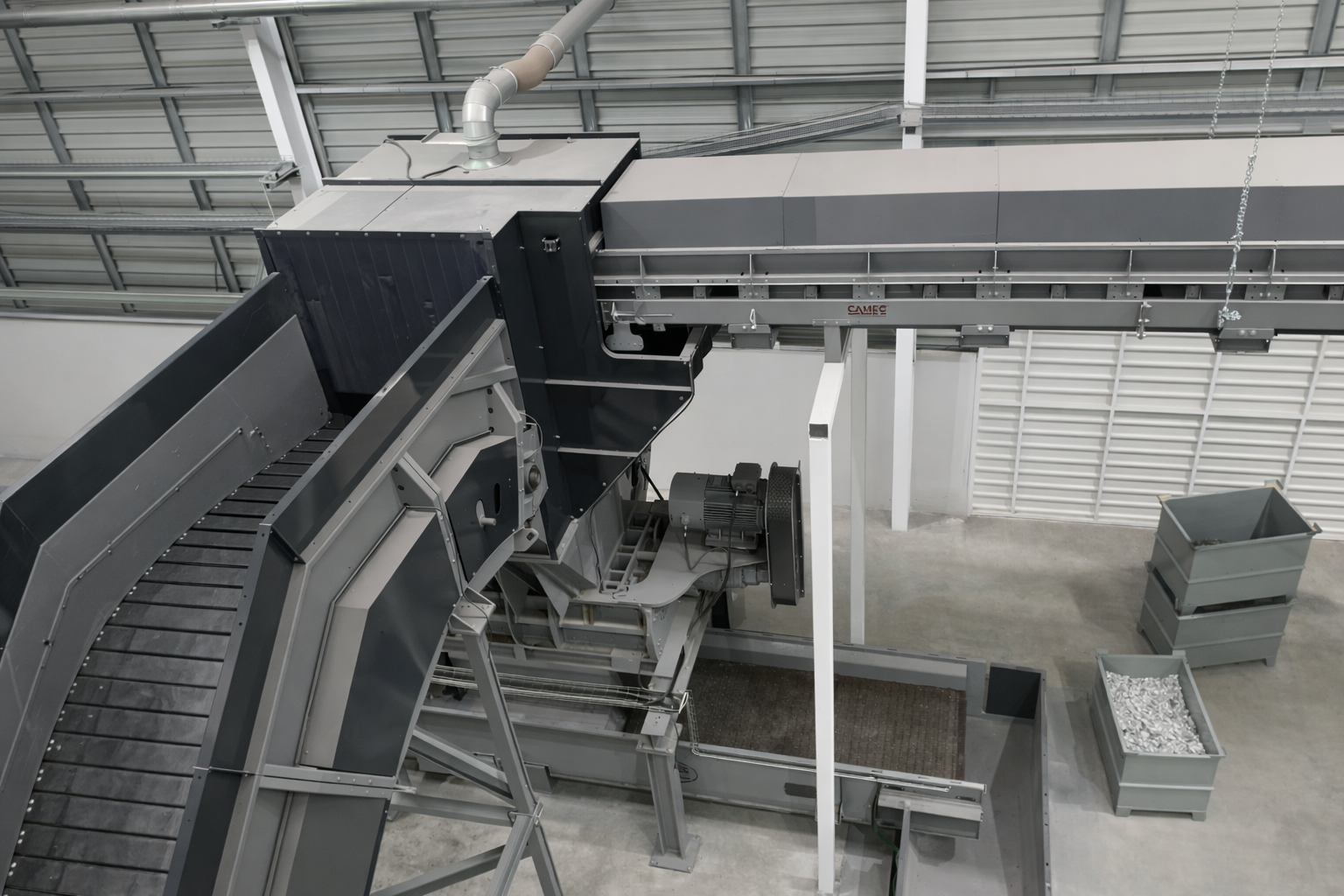
The plant's performance stems from the integration of consolidated WEEE treatment technologies, such as shredding, magnetic and eddy current separation, optical sorting, and dust extraction and filtration systems. This combination maintains process stability even with heterogeneous inputs, reducing downtime and quality fluctuations.
The modular configuration of the plant also represents a strategic advantage, as it allows for future adaptations and expansions without the need to redesign the entire line.
Conclusion
Overall, the WEEE treatment plant developed by CAMEC for the Spanish market stands as an industrial solution oriented toward process efficiency and material valorization. It is designed to guarantee high standards of safety, reliability, and regulatory compliance within the European context.
Are you evaluating an efficient, flexible, and value-oriented WEEE treatment plant?